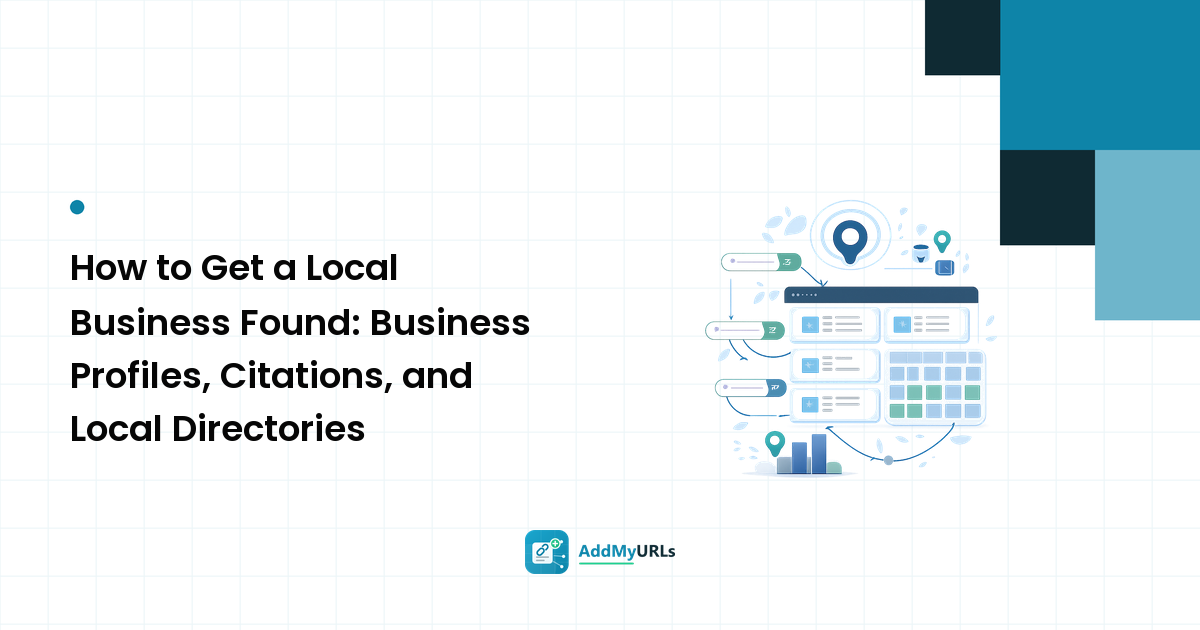
Most local businesses assume their visibility problem is the website. Usually it isn't. The site can be perfectly fine and the business still won't surface for "near me" searches, because search engines can't yet confirm three basic things: that the business is real, that it is where it claims to be, and that its details are the same everywhere. Local search runs on trust in a business's identity — and that trust is something you build, one listing at a time.
Here's the key takeaway up front: local visibility is one consistent identity, repeated in enough trustworthy places to be believable. Search engines rank local results on relevance (do you match the query), distance (how close you are to the searcher), and prominence (how well-established and consistent you look). You can't change distance. You can change how consistent and well-cited your business appears — and that is where almost all the winnable ground is. This guide walks the mechanism, then the steps, and is honest about the parts you don't control.
Local visibility is two surfaces, not one
When someone searches for a local service, results usually come in two blocks, and they follow slightly different rules:
- The map pack — the small cluster of business listings with a map, ratings, and hours. These are drawn primarily from claimed business profiles and the wider web's agreement about each business.
- Organic local results — the ordinary blue links below, where a well-optimized web page can rank for a local query the same way any page ranks.
The good news is that the same foundation feeds both. A business with a consistent identity, a claimed profile, and honest citations tends to do better in the map pack and gives its pages the local relevance to compete in organic results.
Keep the vocabulary straight: being listed somewhere is not the same as being indexed by a search engine, which is not the same as ranking for a query. A listing is a discovery path and a consistency signal — a real but modest asset — not a guarantee of a top spot.
The foundation: one consistent NAP
NAP stands for Name, Address, and Phone number — the core facts that identify a local business. It sounds trivial, yet it's the single most common thing local businesses get wrong — and fixing it is often the highest-value hour you'll spend.
The problem is drift. Over the years a business ends up as "Bright Star Plumbing," "Bright Star Plumbing LLC," and "Brightstar Plumbing" across different sites, with an old suite number on one directory and two phone numbers in circulation. To a search engine, that ambiguity is a reason for doubt — it can't be sure these listings describe the same business, so the whole set is worth less as evidence.
Consistency beats volume
If you take one thing from this guide, take this: being listed accurately in a handful of trusted places beats being listed inconsistently in a hundred. A citation is any mention of your business's NAP on another website — with or without a link. Its job is corroboration: each accurate citation is another independent source agreeing on who and where you are. Contradictory citations do the opposite; they add noise.
So before you submit anything anywhere:
- Decide your canonical NAP — the exact name, address format, and single phone number you will use everywhere, character for character. Match how it appears legally and on your storefront.
- Fix your own website first. Put the NAP in the footer and on a contact page as real text (not baked into an image), so crawlers can read it.
- Audit what's already out there. Search your business name and phone number and note every listing that shows an old address or name. Those are the ones to correct or claim.
Only once your identity is settled does it make sense to go add new listings — otherwise you're just multiplying the inconsistency.
Your business profile is the anchor
The highest-leverage local listing is your claimed business profile — the free listing the major search and map providers offer (Google Business Profile is the one most people mean, but the equivalents on other map platforms matter too). It feeds the map pack most directly, and unlike a random directory, you control it.
Claim and verify it, then fill it out completely:
- Exact NAP matching your canonical version.
- The correct primary category plus honest secondary ones — category is a strong relevance signal, so pick what actually describes the business, not what sounds biggest.
- Real hours, service area, a genuine description, and real photos.
One temptation to refuse: do not stuff keywords into your business name ("Bright Star Plumbing | Emergency Plumber Downtown"). Using a name that isn't your real-world name violates the major platforms' guidelines and is a common cause of suspended profiles — and the honest name is the one that matches all your citations anyway.
Citations and local directories: where to be listed
Once your profile is solid, additional citations reinforce it. This is where local visibility overlaps directory strategy — a local directory listing is a citation that's also a public page and, often, a backlink. Everything in our web directory listings guide about telling a moderated directory from a link farm applies here, with one addition: for local, the consistency of the NAP matters as much as the quality of the directory.
Not all local listing surfaces are equal — choose by relevance and audience, not by volume:
| Listing type | What it is | Best for | Honest value |
|---|---|---|---|
| General local directories | Broad business directories that list any local business | Baseline citation and NAP consistency | Modest but real — corroboration and an occasional referral |
| Niche/industry directories | Directories specific to your trade or profession | Relevant audience actively looking | Higher — relevance plus visitors with intent |
| Geographic/community listings | Local chamber, city, or neighborhood sites | Local prominence and trust | Strong when genuinely local and moderated |
| Data aggregators | Services that feed business data to many downstream listings | Fixing consistency at scale | Useful as plumbing, not visibility itself |
The quality test is the same one that protects you from link farms: does the directory review submissions, prune dead listings, and have a real audience? A directory that auto-approves anything is worth little as a citation and nothing as a backlink.
How many, and how fast
There is no magic number, and anyone quoting an exact count of "citations needed to rank" is guessing. Cover the obvious, relevant places — your profile, the main general directories, the directories specific to your industry and town — and stop when you're repeating yourself into low-quality sites. Steady and accurate beats a blast; a spike of dozens of listings overnight looks manufactured, not established.
Site signals that help local pages rank
Citations build prominence; your own site earns the organic local ranking. A few honest, testable improvements:
- A real location page for each place you serve, with the NAP, an embedded map, hours, and useful content about that location — not ten near-duplicate pages with the town name swapped.
- Local business structured data (schema markup) that states your NAP and hours in a machine-readable format, so search engines can parse your details unambiguously.
- Internal links from your homepage and service pages to those location pages, so crawlers can reach them. If pages aren't being indexed at all, that's a discovery problem — our getting-indexed guide covers why pages stall.
Starting from scratch? The website submission guide is the right first stop before you worry about local at all — it's the same "make your pages discoverable and unambiguous" work, pointed at local intent.
The parts you don't fully control — honestly
Two big local factors deserve plain talk:
- Proximity. Search engines weigh how close the searcher is to your business. A competitor two blocks away may outrank you for that searcher and lose to you near your door. You can't optimize your way out of geography, so "rank everywhere in the city" is usually not a realistic goal for a single location.
- Reviews. Genuine reviews contribute to prominence and influence whether people choose you. The honest guidance is narrow: earn them by asking real customers, and never buy them, post them yourself, or incentivize positive ratings — review fraud breaks every platform's rules and is increasingly detected. There is no safe shortcut.
How to tell whether it worked
Don't guess — check. A few free, testable signals:
- Search your business name and confirm the profile and citations show the correct, current NAP everywhere.
- Watch your profile's own insights for calls, direction requests, and views over time.
- Check referral traffic in your analytics to see which directories actually send humans, and drop the dead weight.
- Confirm your location pages are indexed at all before worrying about their position.
Local visibility is a slow, compounding asset. Expect movement over weeks and months as consistency accumulates — and treat any service promising instant local rankings as the red flag it is.
FAQ
What is a local citation and do I really need one?
A citation is any online mention of your business name, address, and phone number, with or without a link. You don't need hundreds, but you do need your identity to appear consistently on your business profile, your website, and a reasonable set of relevant, trustworthy directories. The value is corroboration: independent sources agreeing on who and where you are.
Does my NAP really have to match exactly everywhere?
Match it as closely as you reasonably can — the same business name, the same address format, and one phone number. Minor formatting differences won't sink you, but genuinely conflicting information (an old address, a different name, a second number) creates doubt and dilutes every listing. Settle on one canonical version and use it everywhere.
Are local directory listings worth it, or are they just spam?
Moderated, relevant local and niche directories are worth it as citations and occasional referral sources — a modest, legitimate signal. Auto-approve directories that list anyone are not; a hundred of them add noise, not trust. The test is whether a directory reviews submissions, prunes dead listings, and has a real audience.
How long until I show up in local results?
It varies — often weeks to months, depending on your market's competition, your proximity to searchers, and how established your business already looks. Consistency compounds over time. Anyone quoting a fixed timeline or guaranteeing a map-pack spot is selling certainty that doesn't exist.
Can I just pay for reviews or a keyword-rich business name to rank faster?
No. Fake or incentivized reviews and keyword-stuffed business names both violate the major platforms' guidelines and are a common cause of suspended profiles. The durable path is a real, accurately named profile, honest citations, and reviews from actual customers.
Get your local identity listed the right way
Local visibility is patient work, but the order is simple: lock in one consistent name, address, and phone; claim and complete your main business profile; then earn accurate citations in relevant, moderated directories and let them compound. When you're ready to add another trustworthy citation, add your business to the AddMyURLs directory for a moderated location listing and a real backlink — a public page with your consistent NAP, so your identity lines up in one more place search engines can check. (Featured placements are paid upgrades and are labelled as such in the directory.)