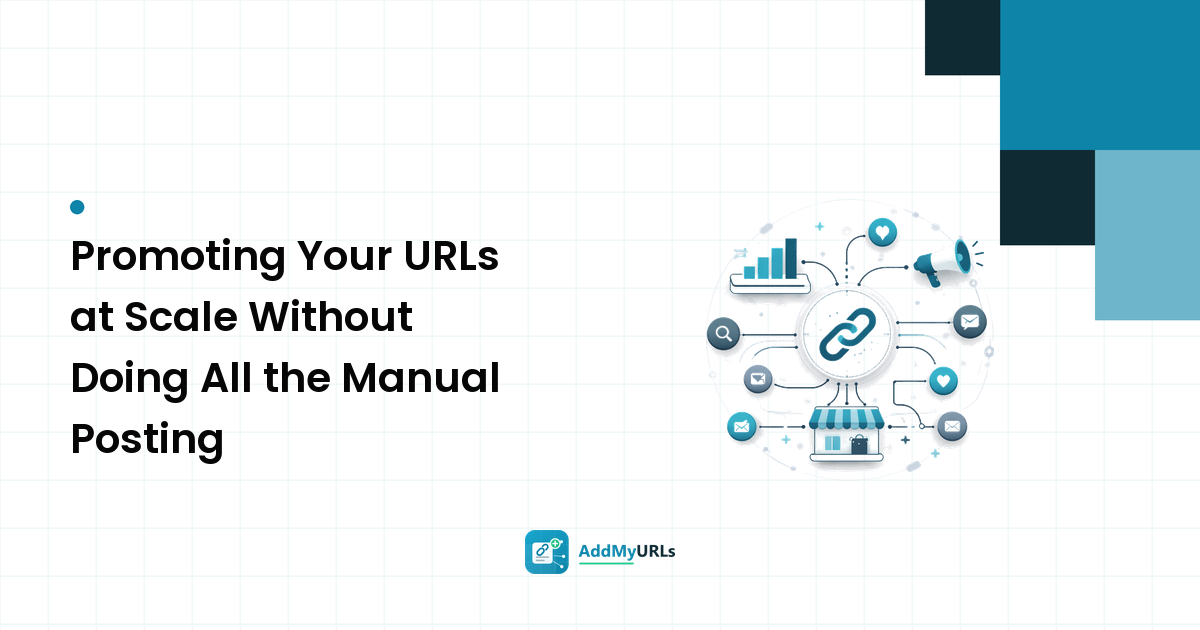
Sharing a single link is a ten-second job. Promoting that same link everywhere it deserves to be — across directories, bookmarking sites, profiles, and relevant communities — is a different animal entirely. The moment one URL needs to live in twenty places, "sharing" turns into manual posting: the same submission, the same copy, filed over and over. For creators and marketers juggling many links at once, that grind quietly becomes the thing that caps how far anything actually travels.
The fix isn't to post faster or to blast a link everywhere indiscriminately. It's to split the work: keep the decisions that need your judgement, and hand off the repetitive posting that scales by buying time rather than thinking harder. Get that split right and your URLs reach further without you living inside a submission form. Get it wrong and you just manufacture spam. Here's the careful version.
Distribution is two jobs, not one
When people talk about "promoting URLs at scale," they're blending two very different kinds of work.
Judgement — the part that stays with you:
- Choosing which URLs are actually worth promoting widely, and which don't need the effort.
- Deciding where each link genuinely belongs — the relevant directories, communities, and profiles, not a random everywhere.
- Writing the description and presentation that represent the link well.
- Reading the results and deciding what to repeat or kill.
Production — the repetitive labor:
- Filing the same submission across a long, pre-vetted list of destinations.
- Re-posting an approved link across many bookmarking and profile sites.
- Getting submitted links crawled and indexed so they're discoverable.
- Keeping consistent records of what went where.
Outsource the first list and you get generic posting that ignores context. Insist on doing the second yourself and you cap distribution at the size of your calendar. The skill is sending the right half to the right place.
Get the presentation right before you scale it
There's no point distributing a link at volume if the link itself looks sloppy everywhere it lands. Before you push a URL out wide, get the basics right: a clean, readable short link, accurate titles, and consistent presentation — the same fundamentals covered in the link sharing guide. When you scale a link, you scale its presentation too. A wholesale service will faithfully post whatever you hand it, including a messy URL or a weak description, so fix those first.
The rule: only links that are well-formed and genuinely worth promoting become candidates for outsourced distribution.
Why a wholesale marketplace beats endless manual posting
Once you decide to delegate the posting, the obvious trap is fragmentation — one tool for bookmarking, a freelancer for directories, a separate service for indexing, each with its own login and bill. Managing those becomes its own part-time job.
This is the practical case for a wholesale marketplace that puts the common distribution services behind one account. A long-running example is SEOeStore, a reseller platform where social bookmarking, directory submission, and indexing sit in one catalog you order from on demand. Why it fits link distribution specifically:
- Breadth in one place. The posting tasks you'd otherwise spread across several tools become line items in one dashboard, so you assemble a small distribution run instead of managing vendors.
- Wholesale pricing. Built for resellers, the per-unit cost is low enough that delegating routine posting is cheaper than your own hours — and leaves a margin if you do this for clients.
- You keep control. You still pick the URLs, write the brief, and judge the output. The marketplace removes the posting, not the decisions.
Distributing at scale without becoming spam
The danger of any paid distribution is that "wide and cheap" slides into "irrelevant and spammy." A little discipline keeps it healthy:
- Brief precisely. Specify the URLs, the destinations or categories, and the description. Vague brief, generic posting.
- Test small first. Run ten placements before a hundred. Check where they landed, whether they got indexed, and whether anything reads auto-generated.
- Distrust volume promises. "Thousands of posts overnight" is the marketing of spam, not reach. Relevant beats enormous, every time.
- Pace it. Drip the distribution rather than dumping everything in a day.
- Measure, then reallocate. Track which destinations actually sent clicks and got indexed. Keep what produces signal; drop what doesn't. If you're already tracking links with UTM tags, lean on that data here.
What to keep doing yourself
Delegating the posting frees time for the work that compounds — choosing genuinely good links to promote, finding the relevant places they belong, and building the few real relationships and shares that no service can manufacture. The right balance for most people is a base of outsourced bookmarking, directory submission, and indexing handling the breadth, with your own attention on judgement and the high-value placements that need a human.
FAQ
Is it safe to pay a service to post my links everywhere?
Paying for the labor of posting relevant links to relevant places is a normal operational decision. The risk is in relevance and intent, not in paying. Blasting irrelevant links at volume to game rankings is the part that gets sites flagged; outsourcing the hours to distribute genuinely useful links is not.
How do I know a distribution service isn't just spam?
Test before you scale. Order a small batch, then check relevance, indexation, and whether anything reads machine-generated. Quality varies by tier even within one marketplace, so judge the tier, not just the platform.
What should I never outsource?
The decisions: which URLs to promote, where they belong, and how you read the results. Those are specific to your links and goals. Outsource the repetitive posting, not the judgement.
Does this make sense if I'm not an agency?
Yes. Even promoting links for your own brand, the value is reclaiming your time — letting a marketplace handle the rote posting so you focus on choosing well and presenting links cleanly.
Next step
Draw the line: list every posting task you currently do by hand and mark each one judgement or production. Keep the judgement column. For the production column, clean up your links, write one clear brief, and place a small test order through a wholesale marketplace like SEOeStore — then measure reach before you scale. That's how promoting URLs at scale stays an asset instead of busywork that never ends.